
The Average Home on the Wire 3 Network Has12 Connected Devices
Think about everything in your house connected to Wi-Fi right now. Phones, laptops, smart TVs, a video doorbell, a thermostat, maybe a speaker or two, a gaming console. It adds up fast, and most of us do not even realize how many devices are quietly connected until something starts to slow down.
Wire 3 is a 100% fiber internet company headquartered in Daytona Beach, Florida. Our network serves customers from Port St. Lucie north through Central Florida communities like Ocala and up the coast through Ormond Beach, with active expansion into Jacksonville, Georgia, and South Carolina.
On the Wire 3 fiber internet network, the average home now has 12 connected devices. That number comes straight from Wire 3's own network data, not a generic stat pulled from an online search, so it reflects what is happening in homes on our network right now! That is a lot of things asking your Wi-Fi for attention at the same time, and it is only going up as more smart home devices become part of everyday life.
Why Homes Have So Many Connected Devices Now
A few years ago, a home network mostly handled a laptop, a phone, and maybe a smart TV. Now it is common for a single household to run security cameras, smart speakers, streaming devices, gaming consoles, and connected appliances all at once. Every one of those devices needs a stable internet connection to work the way it is supposed to.
This shift is a big reason more people are paying attention to their internet speed and their home Wi-Fi coverage. A network that felt fast enough five years ago might not keep up with today's smart home setup.
Not All Devices Use the Same Amount of Bandwidth
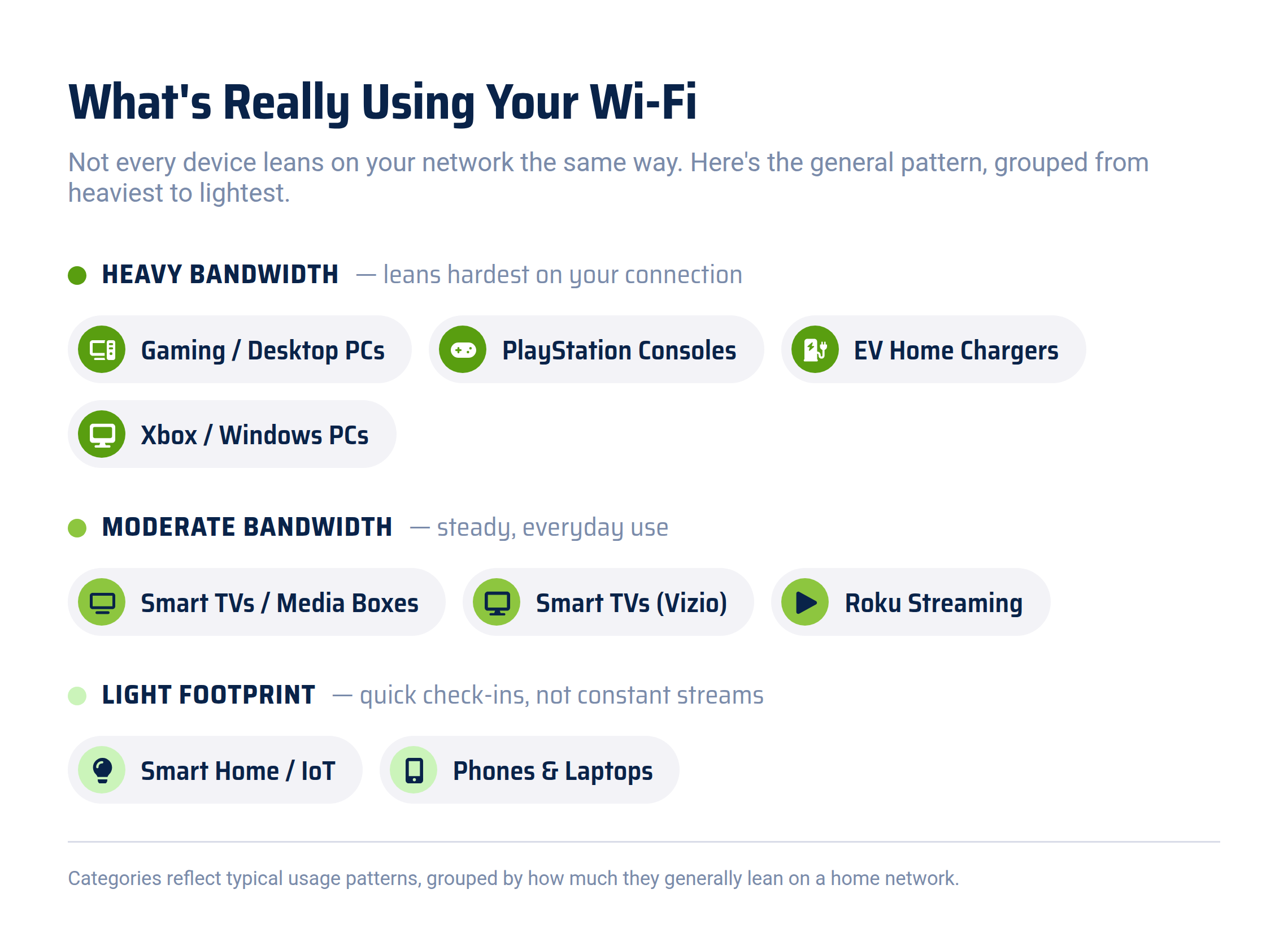
Here is the part that surprises people. Not every connected device puts the same load on your network.
A smart home device barely uses any bandwidth at all. A gaming PC, on the other hand, needs a lot more speed to run smoothly. When several high demand devices are active at the same time, that is usually when people notice slow buffering, dropped video calls, or a doorbell camera that lags right when they need it most.
Understanding which devices are the real bandwidth users can help you figure out whether your current internet plan actually fits how your household uses the internet today. This is exactly why Wire 3 fiber internet is built to handle multiple high demand devices running at once, without everything slowing down.
Signs Your Network Might Be Struggling
- Streaming that keeps buffering
- Video calls that freeze at the worst moment
- Smart devices that take too long to respond
- Wi-Fi signal that drops in certain rooms of the house
The most common sign the Wire 3 team sees is buffering video calls. If that sounds familiar, your network might be working harder than it should.
How to Fix a Struggling Home Network
The good news is this is usually a simple fix. For coverage or congestion issues, Wire 3's Total Connect package is a better upgrade than moving up a speed tier. Adding a single router or upgrading to a mesh network will help make sure you are able to use all the bandwidth you are paying for, no matter what ISP you use.
In general, keeping a home network running smoothly comes down to two things: having enough internet speed for the number of devices in your household, and having strong Wi-Fi coverage in every room, not just near the router. Wire 3 fiber internet is designed to deliver both, with speed that keeps up with a growing smart home and coverage that reaches every corner of the house.
Is Your Network Ready for Today's Smart Home?
With the average home now connecting 12 devices to Wi-Fi, based on real usage across the Wire 3 fiber internet network, it is worth taking a few minutes to check whether your current setup can actually keep up. A fast, reliable connection is not just nice to have anymore. It is what makes everything from streaming to smart security cameras work the way they are supposed to, and it is exactly what Wire 3 fiber internet is built to deliver.
- If you're experiencing network issues, upgrading to Total Connect is a great solution.
Frequently Asked Questions
How many devices does the average home connect to Wi-Fi?
Based on Wire 3's own network data, not a generic online estimate, the average home now has 12 connected devices, and that number continues to grow as more smart home products come onto the market.
What uses the most bandwidth in a home network?
Gaming PCs tend to use the most bandwidth, while devices like smart home gadgets use very little.
How do I know if my home network needs an upgrade?
Common signs include buffering, dropped calls, slow smart home response times, and Wi-Fi dead zones in parts of your home.