Every spring, Florida homeowners stock up on bottled water, test their generators, and reinforce their windows. But there's one item that rarely makes the prep list: your internet connection. In an era where working from home, streaming emergency alerts, video-calling family, and monitoring smart home devices are all part of daily life, a slow or unreliable connection during storm season isn't just annoying — it can genuinely leave you in the dark.
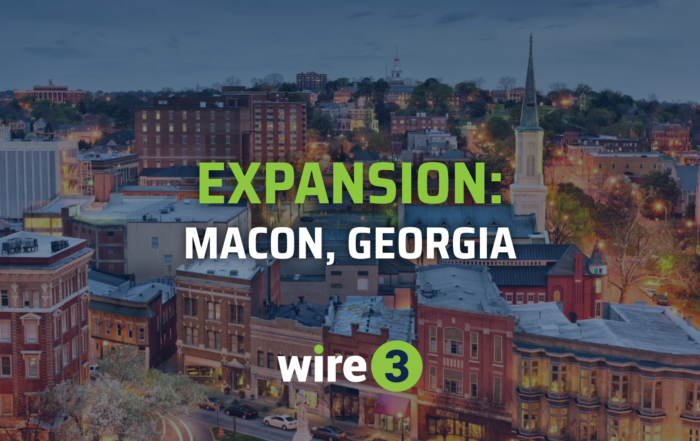
If you're still running on old cable or DSL internet, storm season is the perfect reason to finally make the switch to fiber. Here's what Florida homeowners — and neighbors in Middle Georgia like Macon — need to know.
Why Your Internet Connection Matters More During Storm Season
When a storm is bearing down on your neighborhood, your internet becomes a lifeline. You're streaming live radar, checking emergency management alerts, staying in contact with family, and possibly working remotely while roads are closed. After the storm, you're coordinating with insurance adjusters, uploading damage photos, and getting kids back online for school.
All of that puts enormous demand on your connection at exactly the moment when older infrastructure is most likely to fail.
Traditional cable internet runs on coaxial copper lines. Those lines are sensitive to water intrusion, electromagnetic interference, and physical damage from wind and debris. DSL is even more vulnerable — it runs over the same aging phone line infrastructure that's been in the ground for decades. When things get rough outside, these connections often degrade or drop entirely, even before the worst of the storm arrives.
Fiber is different, and that difference matters whether you're in coastal Florida bracing for a direct hurricane hit or in Middle Georgia — where storms that make landfall hundreds of miles away can still knock out cable service by the time they push inland through Macon and Bibb County.
What Makes Fiber More Resilient in a Storm?
No Electrical Current
Florida leads the nation in lightning activity, and Georgia isn't far behind. Fiber carries no electrical current, so nearby strikes are far less likely to cause damage or service disruption.
Water Resistant
The fiber cable itself doesn't corrode or degrade when exposed to moisture. Heavy downpours that drop cable speeds don't affect fiber the same way.
Newer Infrastructure
Much of the region's fiber network has been built or upgraded in recent years, while cable and DSL often run on infrastructure that's 20–30 years old.
Symmetrical Speeds
Upload damage videos or video-call family at full speed. Cable is typically much slower on upload — fiber gives you the same fast speeds in both directions.
The Case for Upgrading Before June
Storm season officially starts June 1, but the time to upgrade your internet isn't after the first named storm forms in the Gulf — it's now, in the spring, before the rush.
"You don't need a hurricane to lose your cable internet — a typical Florida thunderstorm can do it. We built Wire 3 because people in this region deserve a connection that doesn't quit when the weather turns. Fiber changes the equation entirely. It's why we do what we do."
Jai Ramachandran CEO, Wire 3
Regardless of where you are in the Southeast, here's why upgrading before June makes sense:
What to Look for When Choosing Fiber Internet
Not all fiber plans are created equal. As you evaluate your options, here are a few things worth paying attention to:
True fiber to the home (FTTH) vs. fiber to the node (FTTN). True fiber brings the cable all the way to your home. Fiber to the node uses copper for the final stretch — and that last copper segment is still a vulnerability. Ask providers specifically whether the connection is fiber all the way to your home.
Upload speeds. Check both download and upload speeds when comparing plans — many cable plans advertise fast downloads but have upload speeds ten times slower.
Service Level Agreements and outage policies. Ask providers what their restoration commitments look like after a major storm event. Some providers have dedicated crews for storm recovery.
Contract terms and installation fees. Many providers offer spring promotions. Ask about installation fee waivers and whether there are early termination fees.
A Quick Home Connectivity Checklist Before Storm Season
The Bottom Line
Florida homeowners are used to preparing for storm season in practical, methodical ways — and your internet connection deserves the same attention as your flashlight batteries and storm shutters. That's just as true in Macon and Middle Georgia, where storms don't announce themselves with the same fanfare but can still leave you without service when you need it most.
Fiber internet isn't just faster. In the Southeast's climate, it's genuinely more durable, more reliable under stress, and better suited to the demands of modern households during the months when reliability matters most. Wherever you are in the region, the case for making the switch before June is the same.
Don't wait for the first storm warning. Get connected now — before the rush, before the wait times spike, and before you find yourself wishing you'd made the call sooner.